
History of corn in Latin America
Corn: Why This Food Is at the Heart of Latin American History
When we think of Latin America, we often imagine breathtaking landscapes, colorful cities, vibrant music, and a rich culinary heritage. Yet behind this incredible cultural diversity lies a common ingredient that has shaped the history of an entire continent: corn.
Far more than just a food, corn is a symbol. For thousands of years, it has nourished communities, inspired traditions, influenced beliefs, and occupied a central place in Latin American cuisine.
Even today, it is impossible to understand Latin American gastronomy without understanding the history of corn.
A Plant Born on the American Continent
Corn is one of humanity’s oldest cultivated crops.
Scientists estimate that it was domesticated more than 9,000 years ago in present-day Mexico from a wild plant known as teosinte. Over generations, Indigenous peoples carefully selected the best varieties until they developed the corn we know today.
Long before the arrival of Europeans, this grain had already become a staple food for many civilizations across Central and South America.
Thanks to its ability to adapt to different climates, corn quickly spread throughout the continent.
Corn: A Sacred Food of Pre-Columbian Civilizations
For pre-Columbian peoples, corn represented much more than a source of nourishment.
Among the Maya, it held a sacred status. According to the famous Popol Vuh, the gods created human beings from corn dough.
This belief reflects the fundamental importance of corn in both the daily and spiritual lives of these communities.
The Aztecs also dedicated religious ceremonies to corn, while the Incas developed extensive agricultural systems that allowed it to be cultivated on a large scale.
Corn was everywhere: in the fields, in the markets, in rituals, and at family meals.
The Food That Enabled Great Civilizations to Flourish
The history of many Latin American civilizations is closely linked to the history of corn.
Its ability to produce abundant harvests helped feed growing populations and encouraged the development of cities, trade networks, and complex political structures.
Without corn, some of the greatest pre-Columbian civilizations might never have reached such remarkable levels of development.
Just as wheat became essential in Europe and rice in Asia, corn became the cornerstone of many societies across the Americas.
An Incredible Diversity of Varieties
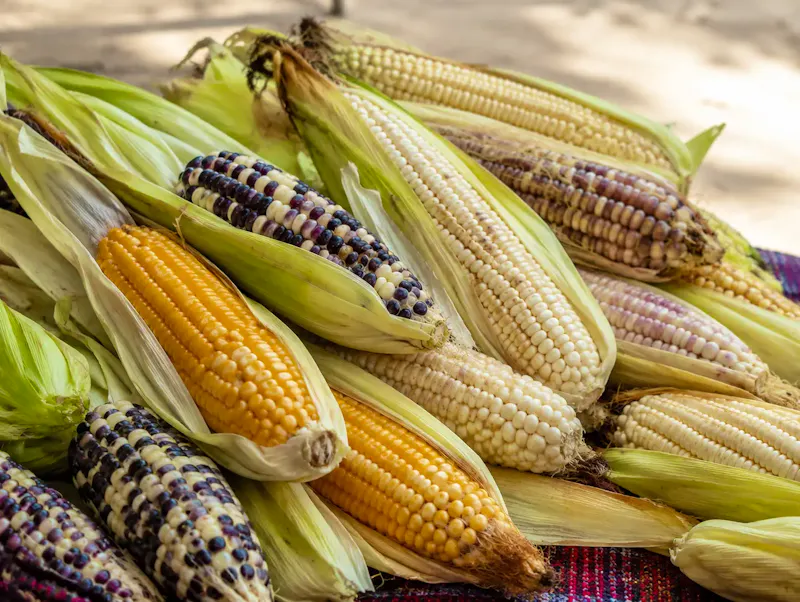
Contrary to the image many people have today, corn is not limited to the yellow ears commonly found in supermarkets.
Latin America is home to hundreds of different varieties.
White, yellow, blue, purple, red, and black corn can all be found throughout the region. Each area has developed its own varieties adapted to local climates and culinary traditions.
In Peru, certain varieties produce the famous giant corn kernels often served alongside ceviche.
In Mexico, blue corn is used to make highly prized artisanal tortillas.
This diversity represents a valuable cultural and agricultural heritage.
Corn in Latin American Gastronomy
It is almost impossible to travel through Latin America without encountering corn in one form or another.
Every country has developed its own traditional recipes based on this versatile ingredient.
Tortillas in Mexico
A fundamental element of Mexican cuisine, tortillas accompany countless dishes and are consumed daily by millions of people.
Arepas in Colombia and Venezuela
Made from corn flour, arepas are an essential part of the culinary culture of both countries and are enjoyed from breakfast to dinner.
Tamales
Popular throughout Latin America, tamales are made from corn dough filled with meat, vegetables, or cheese before being wrapped in leaves and steamed.
Chicha
This ancestral beverage made from fermented corn is still consumed in several regions of the Andes.
Humitas
Very popular in Andean countries, humitas showcase the culinary creativity that has developed around this ancient ingredient.
How Corn Conquered the World
The arrival of Europeans in the Americas during the 15th century marked the beginning of corn’s global expansion.
Easy to cultivate and highly productive, it quickly attracted the attention of farmers across Europe, Africa, and Asia.
Today, corn is one of the most widely cultivated crops in the world.
Yet its roots remain deeply connected to the lands and cultures of Latin America.
Why Corn Remains a Cultural Symbol Today
Despite globalization and changing eating habits, corn continues to hold a unique place in Latin American identity.
It symbolizes heritage, continuity, and the connection between generations.
In many communities, corn-based recipes are still prepared using techniques passed down from ancestors.
Every handmade tortilla, every arepa shared with family, and every tamal enjoyed during a traditional celebration tells a story that stretches back thousands of years.
Corn: Much More Than an Ingredient
Understanding the history of corn means understanding part of the soul of Latin America.
This grain has nourished civilizations, inspired myths, shaped cultures, and given rise to some of the continent’s most iconic dishes.
Even today, it remains at the heart of Latin American gastronomy and continues to bring people together around universal values: sharing, tradition, and community.
The next time you enjoy a tortilla, an arepa, or a tamal, remember that you are tasting much more than a simple food.
You are experiencing a heritage that is more than 9,000 years old.
Discover also
History of arepas : Colombia, Venezuela
Discover the history of arepas, a symbol of Colombia and Venezuela, a millennia-old heritage of corn and Latin American culture.History of peruvian Ceviche
Discover the fascinating history of ceviche, an iconic Latin American dish, through ancestral traditions, Peruvian culture, and marine flavors.